Related: Best First Gunpla Kits for Beginners: Grades Explained
The model kit building essentials on my bench are not the photogenic part of the hobby. Nobody posts a brush. Nobody photographs a reference book next to a finished build. But every clean seam line and every even base coat on that finished build came from something that sat on the bench first.
I have been building since I was 11, which is long enough to hold opinions about part fit that nobody asked for. Fifteen years of Gunpla, ten years of airbrushing, and a backlog that will outlive me. The lesson that keeps repeating is simple: the kit gets the credit and the tools do the work. A well engineered snap-fit kit with hidden gates and a sharp brush beats an expensive kit and a bad brush every single time.
So this is a bench list, not a wish list. Four things I would put in front of someone setting up: a two-pack mecha kit that gives you a build and a paint experiment in one box, a synthetic base brush for laying down color, and two reference books covering the two oldest branches of the hobby, ships and cars. None of it requires a spray booth, a compressor, or a dedicated room.
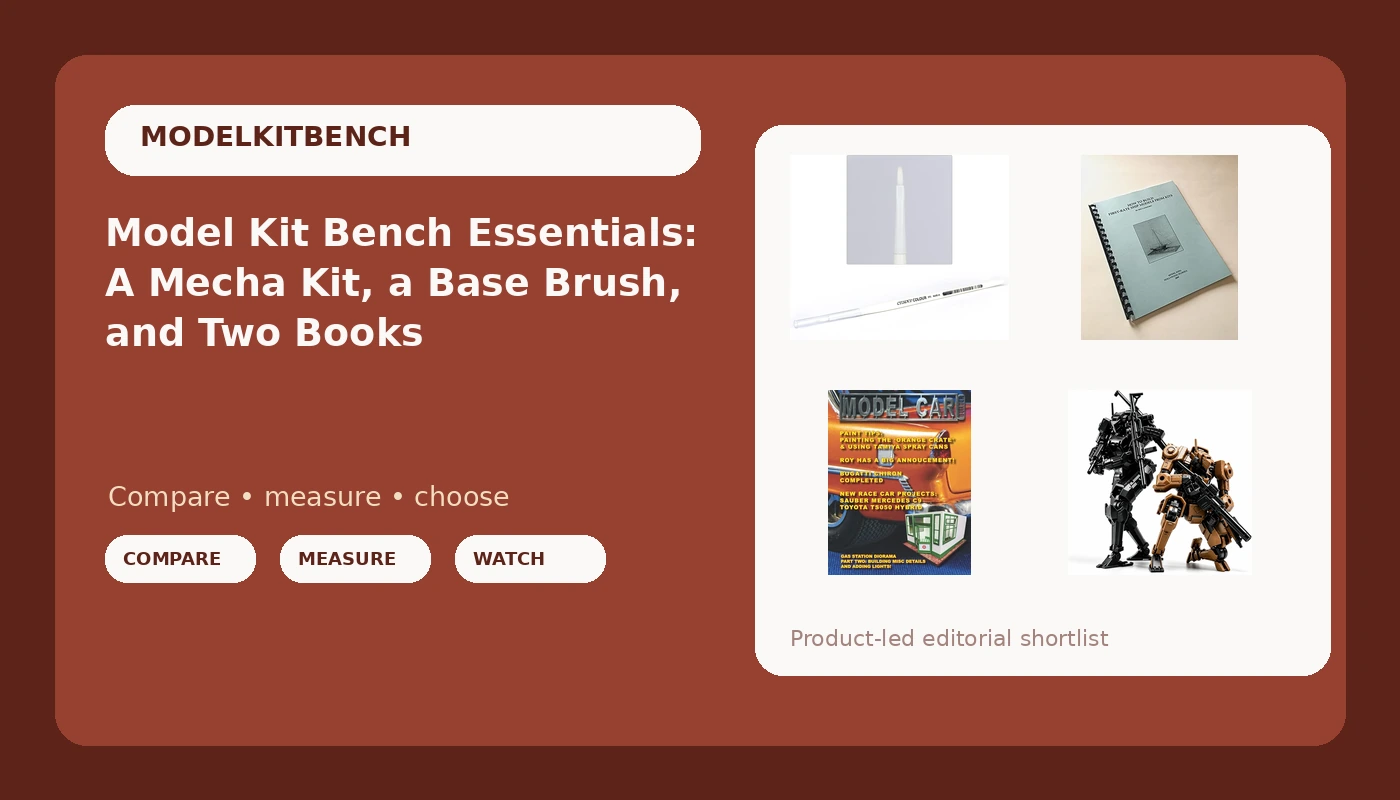
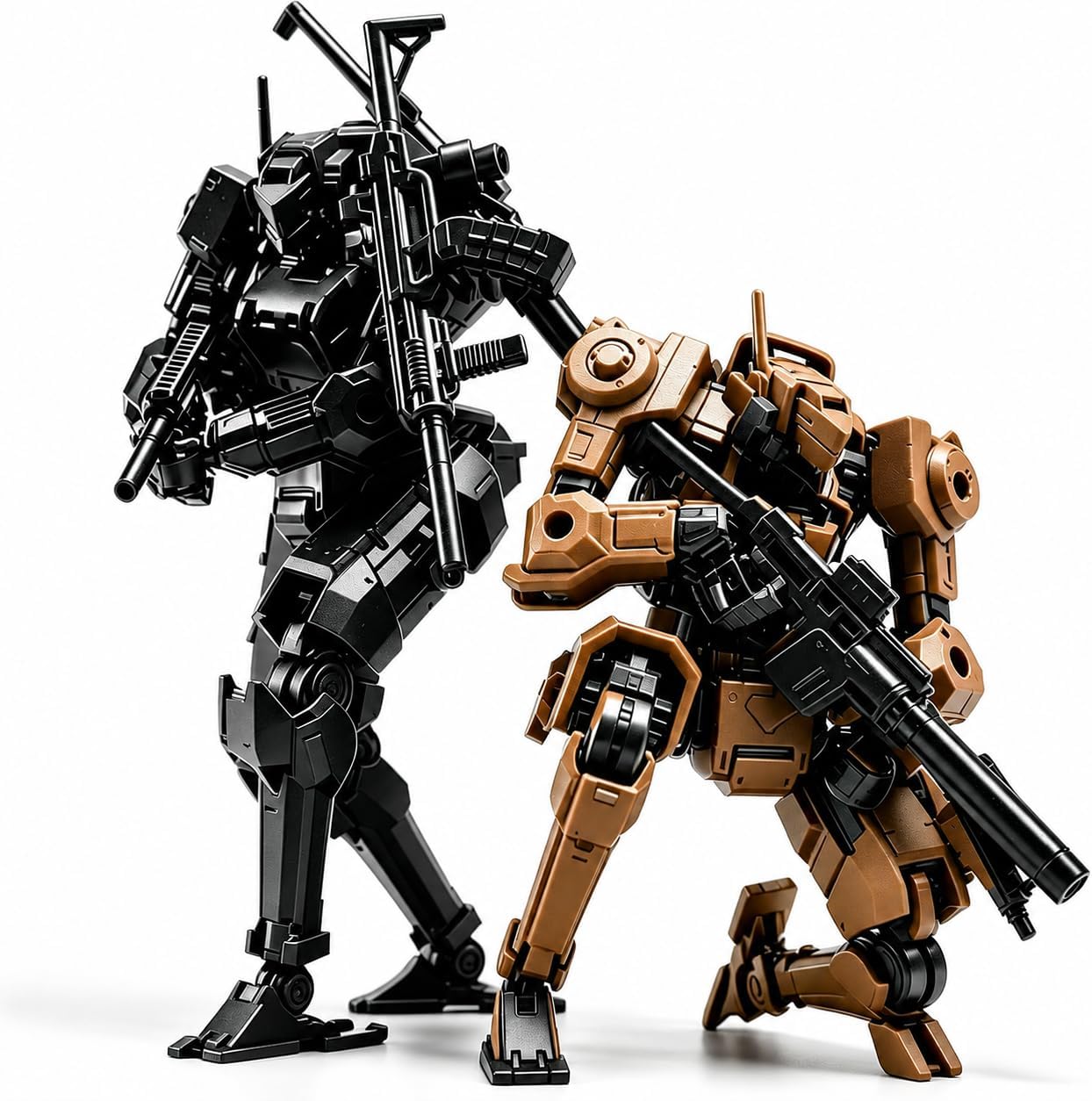
Best Quick Build: Sheik Mainland Fenrir Articulated Mecha Model Kit, 1/18 Scale, 2 Pack
Two articulated mecha kits in one box at 1/18 scale, with no license attached. That last detail matters more than people expect. Licensed kits sell on the logo on the box. An original mecha design has to sell on engineering, and engineering is the only thing I care about.
A 1/18 scale mecha is small enough to finish in an evening or two, and small scale is unforgiving in a very specific way. There is nowhere to hide a badly placed gate, and a seam line across a 1/18 shoulder is a visible scar rather than a texture. So the first thing I check on any kit in this size class is where the gates sit and whether any of them land on a surface you will look at from the front. The second is whether the articulation actually holds. Poseable joints are a promise, and a ball joint that goes limp under the weight of a raised arm breaks that promise.
The two-pack is the part that earns its place here. Build one straight out of the box, no paint, no putty, and see what the plastic does on its own. Then take the second copy and use it the way you would use a scrap body: test a panel line wash, test a color you have not sprayed before, test whether a matte topcoat kills the plastic sheen the way you want it to. That second kit costs you nothing in risk because it was never going to be the display piece. It is the cheapest way to stop practicing on kits that matter.
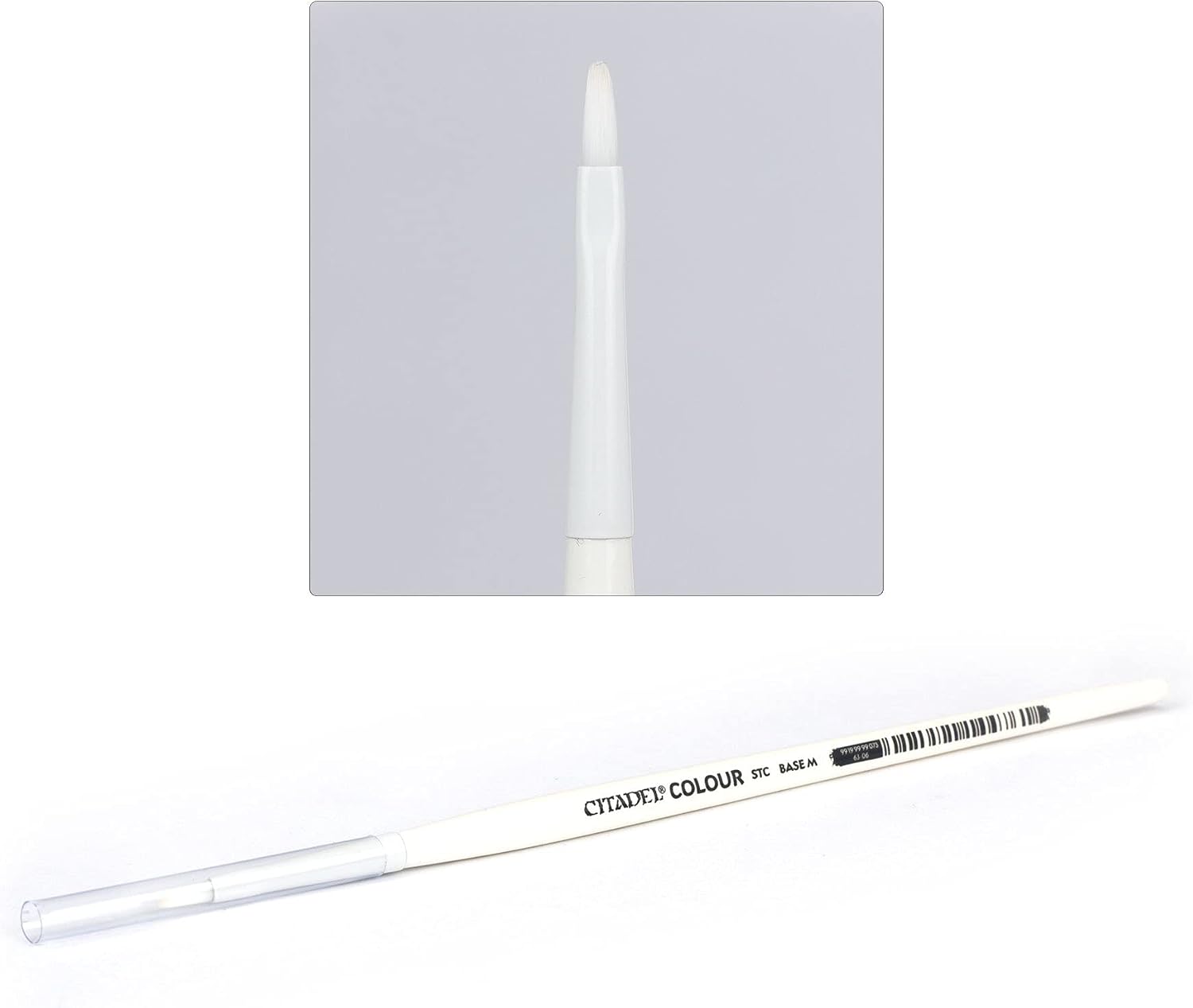
Best Base Coat Brush: CITADEL Warhammer: Synthetic Base Brush Medium
If you are buying one brush, buy the middle of the range. A medium base brush is wide enough to cover a car body or a mecha torso without a hundred passes, and narrow enough that you still control where the edge stops. Base brushes exist for coverage, and coverage is what you want on large flat panels before you ever think about detail work.
Synthetic bristles are the practical choice for acrylic paint. They tolerate water based paint, repeated rinsing, and the occasional accidental dip into the ferrule far better than their price suggests, and they keep a usable point if you treat them well. Sable is lovely for fine detail and terrible as a first brush, because a beginner will ruin it inside a week and blame the brush.
The rules for making a base brush last are not complicated. Never let paint climb past the bristles into the metal ferrule, because dried paint there splays the brush permanently. Rinse between colors instead of letting a loaded brush sit. Wipe on a paper towel with a twisting motion rather than dragging the tip flat. And when the brush starts to lose its edge, do not throw it out. It becomes the drybrush brush, then the primer brush, then the brush you use for putty dust. A base brush has three careers.
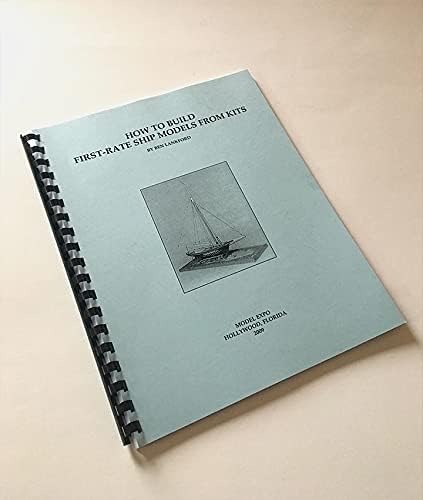
Best Reference for Ship Builders: Model Shipways How to Build First Rate Ship Models from Kits
Ship modeling is the deep end of this hobby, and it does not pretend otherwise. Wooden ship kits are not snap-fit. They are glue, clamps, planking, and patience, and a hull that goes together slightly out of fair will telegraph that mistake through every layer you add on top of it.
A book that walks through building a first rate ship from a kit is not a luxury purchase. It is the difference between a hull that reads as a ship and a hull that reads as a pile of sticks. Planking schedules, how to taper a plank so it lies against its neighbor, how to keep the sheer line honest, and how much of the rigging to install before the masts go in are all things that experienced builders learned by wrecking a model first. You can pay for that knowledge in a book or pay for it in a kit you cannot unbuild.
If you have only ever built plastic, this is the branch that will humble you fastest, and it is also the branch where a reference on the bench pays for itself on the first hull.
Best Reference for Car Builders: Model Car Builder: Tips, tricks, how-tos on model car building!
Car modeling is a paint contest disguised as a plastic kit. The parts fit or they do not, and most modern car tooling fits acceptably. What separates a shelf model from a show model is the body: a base coat with no orange peel, a clear coat with no runs, panel lines that stay crisp under three layers of paint, and trim that reads as chrome instead of silver paint.
That is why a tips and how-tos book belongs on the bench next to the car kit. Paint problems are almost never solved by buying a better airbrush. They are solved by knowing how thin to reduce, how far to hold the nozzle, how many coats to build before you stop, and how long to wait before you touch anything. Every one of those answers came from somebody else's ruined body first.
Car building also has the widest gap between what the box art promises and what the plastic delivers, which is exactly why the reference material matters here more than in almost any other branch.
How I score a kit on this bench
Every kit that gets a verdict on this site goes through the same process, and the process has not changed in years. One full build with no aftermarket parts, no photo etch, no resin upgrades, no third party decals. Whatever is in the box is what gets judged, because that is what you are actually buying.
The scorecard covers part fit first. Snap-fit is the standard, and a kit that needs glue where the box claims it does not is a kit I will say so about. Second is gate placement. A gate on a visible surface is a design decision that costs you sanding time, and under-gates are the mark of someone who thought about the builder. Third is the seam line check, which is the honesty test of the whole thing. Good engineering hides the seam where two halves meet. Bad engineering hands you a putty job and calls it detail.
Decals get their own line on the scorecard. A waterslide that shatters in warm water is a design failure, not a user error, and no amount of setting solution fixes a decal that disintegrates on contact. And the last question is the one that matters most: would I build this again for fun? That is the test that separates a kit worth recommending from a kit that merely looks good in photographs.
Bench notes: what actually matters here
Tools and references are boring to buy and impossible to fake. You cannot buy your way to a clean seam line with a more expensive kit. You get there with sanding sticks, patience, and the willingness to go back over a nub you thought you had already handled.
Scale changes the rules. Small kits like a 1/18 mecha punish sloppy gate cleanup because there is no surface area to distract the eye. Large kits punish sloppy paint because a flaw on a big flat panel is impossible to ignore. Books about ships and cars are useful for the same reason: both branches put the difficulty in a place you cannot hide.
The single best habit is the second copy. Buy two of something cheap, build one carefully, and treat the other as a test mule. Paint experiments, decal experiments, panel line experiments. Nobody learns a technique on the model they care about, and the people who try always end up stripping a body and starting over.
| Item | What it is | Best for | Notes |
|---|---|---|---|
 Visit on Amazon → Sheik Mainland Fenrir Articulated Mecha Model Kit, 1/18 Scale, 2 Pack |
Two articulated mecha kits, 1/18 scale | A weekend build plus a risk-free paint test | The second kit is the practice piece |
 Visit on Amazon → CITADEL Warhammer: Synthetic Base Brush Medium |
Medium synthetic base brush | Laying down base coats on large flat areas | Keep paint out of the ferrule and rinse between colors |
 Visit on Amazon → Model Shipways How to Build First Rate Ship Models from Kits |
Reference book | Ship builders working from wooden kits | Planking, fair hulls, and rigging order |
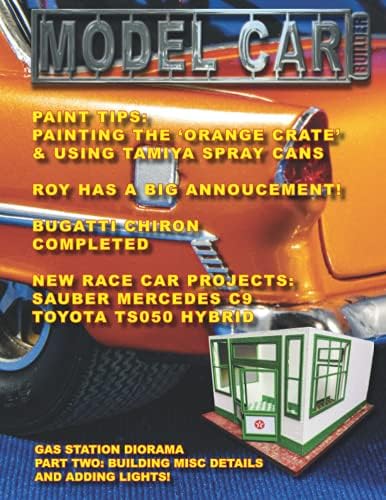 Visit on Amazon → Model Car Builder: Tips, tricks, how-tos on model car building! |
Reference book | Car builders chasing a clean paint job | Base coat, clear coat, and trim work |
Should you buy the Sheik Mainland Fenrir two-pack?
Yes, if you want a small articulated build you can finish in an evening and a second copy to abuse. The two-pack structure is the whole argument. One kit goes together clean and goes on the shelf. The other one takes the panel line wash you have never tried, or the color you mixed and are not sure about, and it does not matter if it works.
At 1/18 scale it does not demand shelf space, and it does not demand a compressor. It is a bench project, not a display commitment.
Should you buy the CITADEL Synthetic Base Brush Medium?
Yes, and I would buy it before I bought another kit. A medium synthetic base brush covers large areas quickly, survives acrylic paint and repeated rinsing, and gives you a usable edge without asking you to baby a sable tip you are not ready to maintain.
Rinse between colors, keep paint out of the ferrule, and it will serve through several builds before it retires into drybrush duty.
Should you buy the Model Shipways book?
Yes, if you are moving into wooden ship kits or thinking about it. Ship models punish optimism more than any other branch, and a hull that is not fair will never look right no matter how good the rigging is. Learning planking and rigging order from a book is cheaper than learning it from a hull you have to throw away.
If you only build plastic mecha, this is not for you. If you have ever looked at a wooden ship kit and hesitated, this is the hesitation solver.
Should you buy Model Car Builder?
Yes, if paint is where your car builds stall. Car modeling is a paint contest, and the tips that fix a rough base coat or a run in the clear coat are not obvious until someone shows you. This one sits on the bench while you work, which is exactly where a reference belongs.
Buy the book, then buy two cheap car kits and treat one as the mule. That combination will teach you more than five kits built alone.