Related: Best Model Kits for Beginners: Snap-Fit Kits That Need Zero Glue
Part fit is the soul of a kit. I have said that so many times that people in my local club finish the sentence for me. A kit that needs glue where the box promised snap-fit is a bad kit, no matter how good the box art looks. So when a stack of boxes lands on my bench, the first thing I judge is not detail and not decals. It is whether the parts come together the way the engineers intended, and whether the gates were placed by someone who has actually built a model.
That is the lens for this guide. Four kits, four different jobs: a Bandai Star Wars Falcon, a Tamiya Panther, a Revell wagon, and a sheet of aftermarket waterslides that has to prove itself on a finished model. Model kit part fit is the through line, but I am also watching gate placement, seam lines, and whether the decals behave in warm water. Those four things tell you more about a kit than any sprue shot ever will.
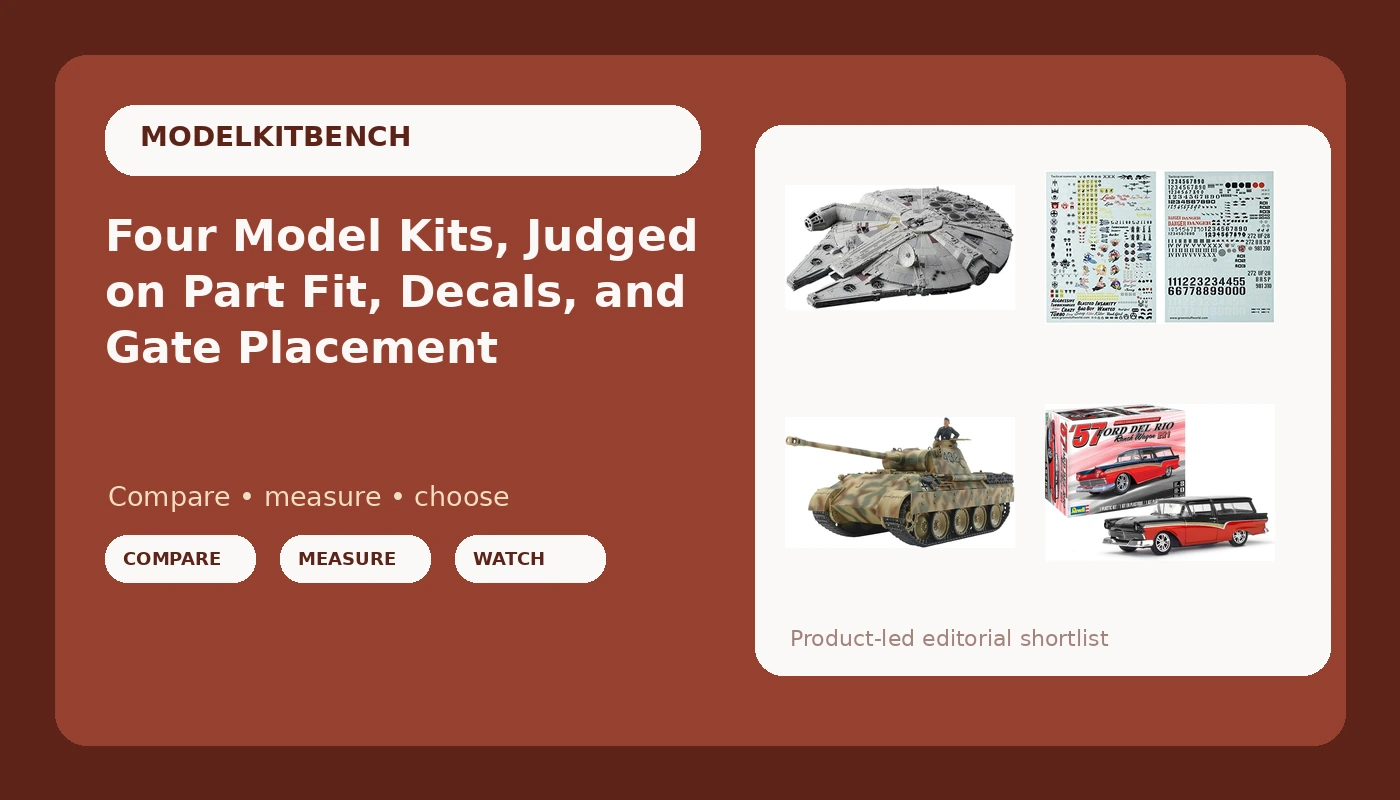
Best Overall: Bandai Star Wars Millennium Falcon (Rise of Skywalker Ver)
If you want the kit in this group that shows off what modern tooling can do, this is it. Bandai Spirits builds its Star Wars line around snap-fit assembly and multi-color molding, and a 1/144 Falcon is the perfect place to see it. The ship is all flat saucer panels, greebled sidewalls, and a cockpit that could easily turn into a seam-line crime scene. Good engineering hides those seams. Bad engineering makes you reach for putty.
The scale is the smart part. At 1/144, the Falcon is big enough to hold real detail but small enough that you are not committed to a shelf-eating display piece. It also means the parts count stays sane, so the build does not turn into a marathon of sanding.
Two things to know before you buy. First, this is the Rise of Skywalker version, so the box art and the parts reflect that release. Second, Bandai plastic rewards patience more than force. Dry-fit the sidewalls before you commit, and keep a panel line tool nearby. A pass of ink over the recessed detail does more for a Falcon than any amount of extra paint.
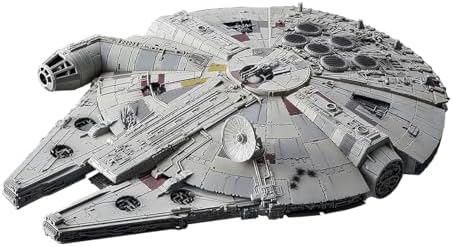
Best Value: TAMIYA 1/48 German Tank Panther Ausf D
Tamiya's scale models are the gold standard for military subjects, and the plastic quality is unmatched. The Panther Ausf D is the early production version, which matters if you care about which batch of armor you are putting on the shelf. It gives you a subject with plenty of historical marking options and a hull shape that rewards clean assembly.
Here is the one thing you have to watch. The listing name carries both 1/48 and 1/35, and those are two very different footprints. A 1/48 armor kit sits comfortably next to 1/48 aircraft. A 1/35 kit takes real shelf real estate and pairs with figures and diorama accessories at a different scale. Read the listing, confirm the scale, and buy the one that matches your collection. If you mix them by accident, you will notice the moment you set it next to your other armor.
Tamiya kits also tend to ask for glue, and that is fine. This is not a snap-fit product. What you get for the glue is tight engineering, clean moldings, and a parts breakdown that makes sense when you read the instructions.
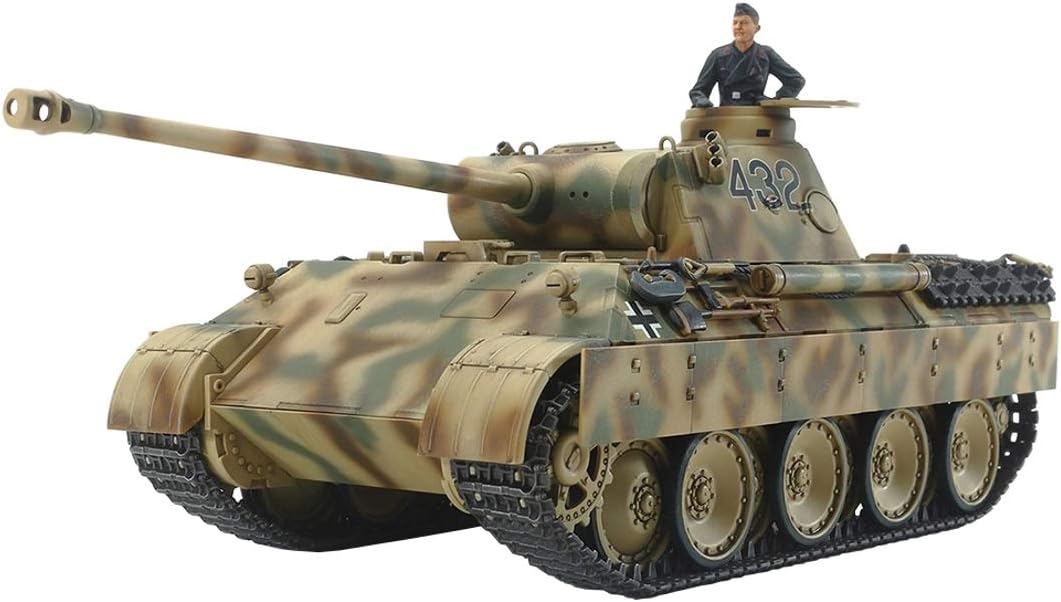
Best Decal Upgrade: Green Stuff World Waterslide Decals, Tactical Numbers and Pinups
Decals should behave. That is my whole position on the subject, and it is why a decal sheet is a legitimate product to review rather than a footnote. Waterslides that shatter in warm water are a design failure, not a user error, and aftermarket sheets live or die on how they release from the backing paper.
This sheet gives you tactical numbers and pinup art in one place. Tactical numbers are the unglamorous workhorse of armor modeling. They let you pick a vehicle number, build a story around it, and make a plain hull look like it belongs to a unit instead of a display stand. The pinup art is the fun half, the nose art and turret art that turns a factory-fresh tank into a crew's tank.
Two practical notes. Use warm water, not hot, and give each decal twenty to thirty seconds before you test it with a brush. Set them over a glossy surface so you have room to slide them into position, then seal them with a clear coat before you weather over the top. If you are building the Panther above, this is the natural pairing.
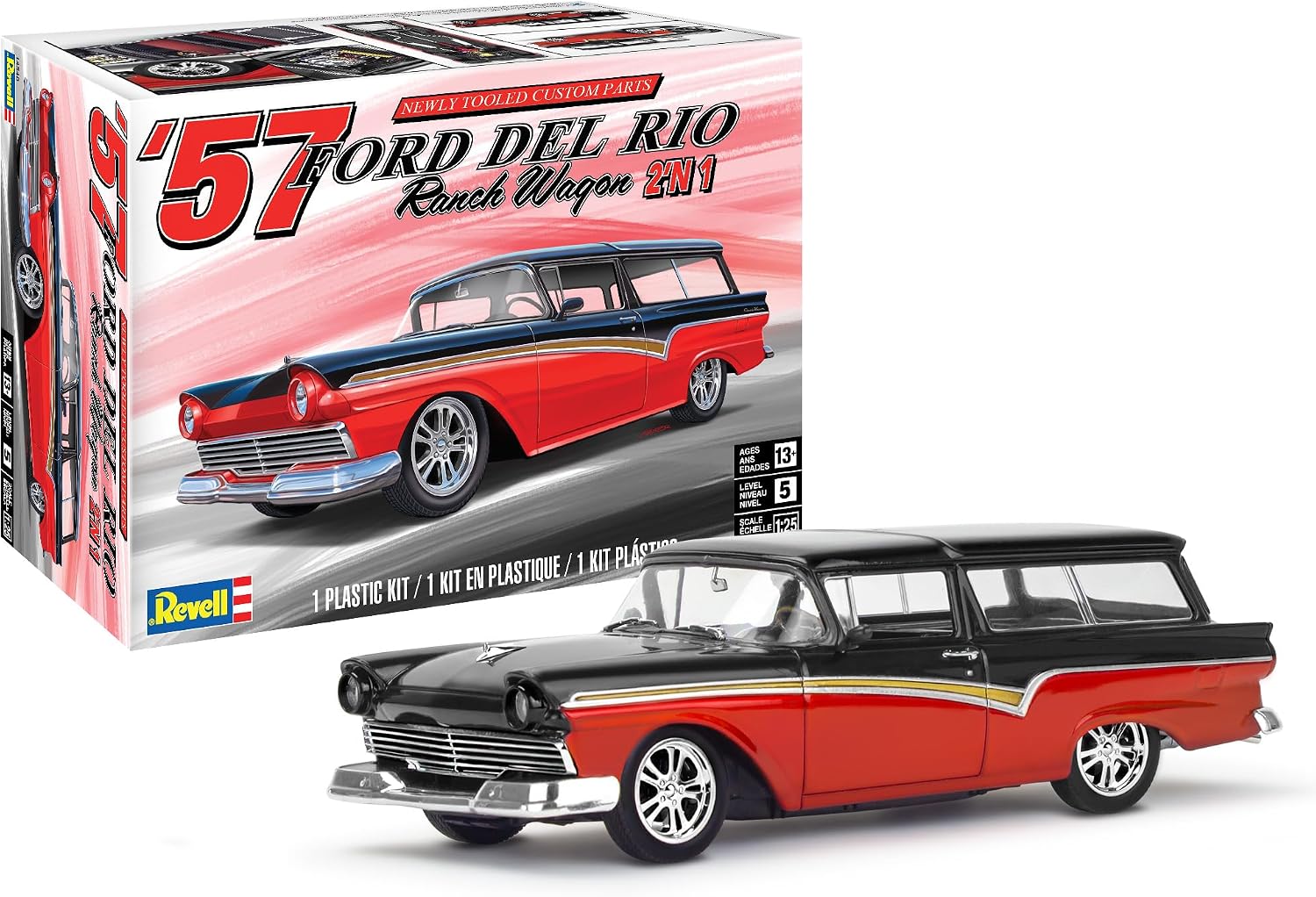
Most Ambitious: Revell 14548 '57 Ford Del Rio Ranch Wagon 2'N1
Revell is hit or miss, and I say that as someone who keeps buying them. The new tooling is decent. The old tooling is a test of your patience. This one tells you what you are getting right in the name: 197 pieces, skill level 5, 1:25 scale, and a 2-in-1 option that lets you build it two ways.
Skill level 5 is not marketing fluff. It means glue, paint, and a real commitment to cleanup. Two hundred pieces in a car kit is a lot of chrome, trim, and interior, and every one of those parts has a gate mark you have to deal with. Budget your time accordingly.
The 2-in-1 aspect is the reason to pick this over a simpler wagon kit. You decide the build, and that decision shapes the parts you use, the stance you get, and how the interior comes together. For a builder who is past the snap-fit stage and wants a project that lasts a few weekends, a 1:25 wagon with this parts count is a genuine step up.
How I test a kit
Every kit gets the same treatment. A full build with no aftermarket parts, unless the aftermarket part is the product being judged. That rule exists so I am not hiding a bad kit behind resin and photo-etch.
The part-fit scorecard is simple. Do the joints close without glue? Where a kit claims snap-fit, does it actually snap, or does it sag the moment you pick it up? Are there gates sitting on visible surfaces, which means extra sanding and a higher chance of a flat spot? Are the seam lines placed where the engineering hides them, or are they running straight down the middle of the most visible panel?
The seam line check is the honesty test. A kit that forces you to putty a seam across a curved surface is telling you the mold was designed for the machine, not for the builder.
Then the decal test. Warm water, timed release, and a look at whether the film goes clear over a gloss coat. Decals that silver or crack get called out.
What actually decides these four kits
Snap-fit is the standard, not a bonus feature. When a kit is engineered for it, the joints have real friction and the assembly holds its shape while you work. When it is not, you find out fast, usually at the point where a subassembly drops onto the floor.
Gate placement separates good kits from frustrating ones. Gates on hidden surfaces mean less sanding and fewer mistakes. Gates on visible surfaces mean you are one slip of the nipper away from a gouge you cannot fix without filler.
Scale discipline matters more than people admit. The Panther listing carries two scales in its name, and the difference between 1/48 and 1/35 is the difference between a shelf and a whole shelf. The Falcon at 1/144 and the wagon at 1:25 are both deliberate choices about how much display space you are willing to give up.
And decals are engineering too. A sheet with crisp registration and film that releases cleanly is worth buying. A sheet that fights you is worth returning.
The model kit reference table
This is the quick version. Scale and parts count are pulled straight from the product listings, and the buy column takes you to the current listing.
| Kit | Scale | Pieces or skill level | What it is for | Where to buy |
|---|---|---|---|---|
 Visit on Amazon → Bandai Star Wars Millennium Falcon (Rise of Skywalker Ver) |
1/144 | Bandai Spirits snap-fit | Best all-around build and the safest first pick | Visit on Amazon → |
 Visit on Amazon → Tamiya German Tank Panther Ausf D |
Confirm on the listing | Glue and paint build | Best value for armor builders who want Tamiya plastic | Visit on Amazon → |
 Visit on Amazon → Green Stuff World Waterslide Decals, Tactical Numbers and Pinups |
Fits scale models and miniatures | Decal sheet | Best marking upgrade for armor and vehicle builds | Visit on Amazon → |
 Visit on Amazon → Revell 57 Ford Del Rio Ranch Wagon 2'N1 |
1:25 | 197 pieces, skill level 5 | Best long project with two build options | Visit on Amazon → |
Should you buy the Bandai Millennium Falcon?
Yes. It is the kit here that proves the point about part fit. Bandai Spirits engineers its Star Wars line as snap-fit, multi-color builds, and at 1/144 the Falcon is detailed enough to look serious on a shelf without eating your whole year. Dry-fit the sidewalls, run a panel line wash into the recesses, hit it with a matte coat, and you have something worth showing people.
The tradeoff is that it is a Bandai kit, which means the plastic rewards patience and punishes force. Push a part in at an angle and you will learn that lesson. Get it right and you will wonder why every kit is not built this way.
Should you buy the Tamiya Panther Ausf D?
Yes, with one warning attached. Tamiya plastic is the gold standard for military subjects, and the Panther Ausf D is an early production machine with good marking potential. If you want a glue-and-paint armor build that goes together cleanly, this is the safe pick in this group.
The warning is the scale. The listing name carries both 1/48 and 1/35, and those are not interchangeable. Check the listing, confirm the scale, and make sure it matches the rest of your shelf.
Should you buy the Revell Del Rio Ranch Wagon?
Only if you know what you are signing up for. Two hundred pieces at skill level 5 means glue, paint, and a lot of cleanup. Revell's new tooling is decent, but this is not a beginner kit and it does not pretend to be. If you want a project that spans a few weekends and a 2-in-1 decision you get to make, it earns its place. If you want a quick win, buy the Falcon instead.