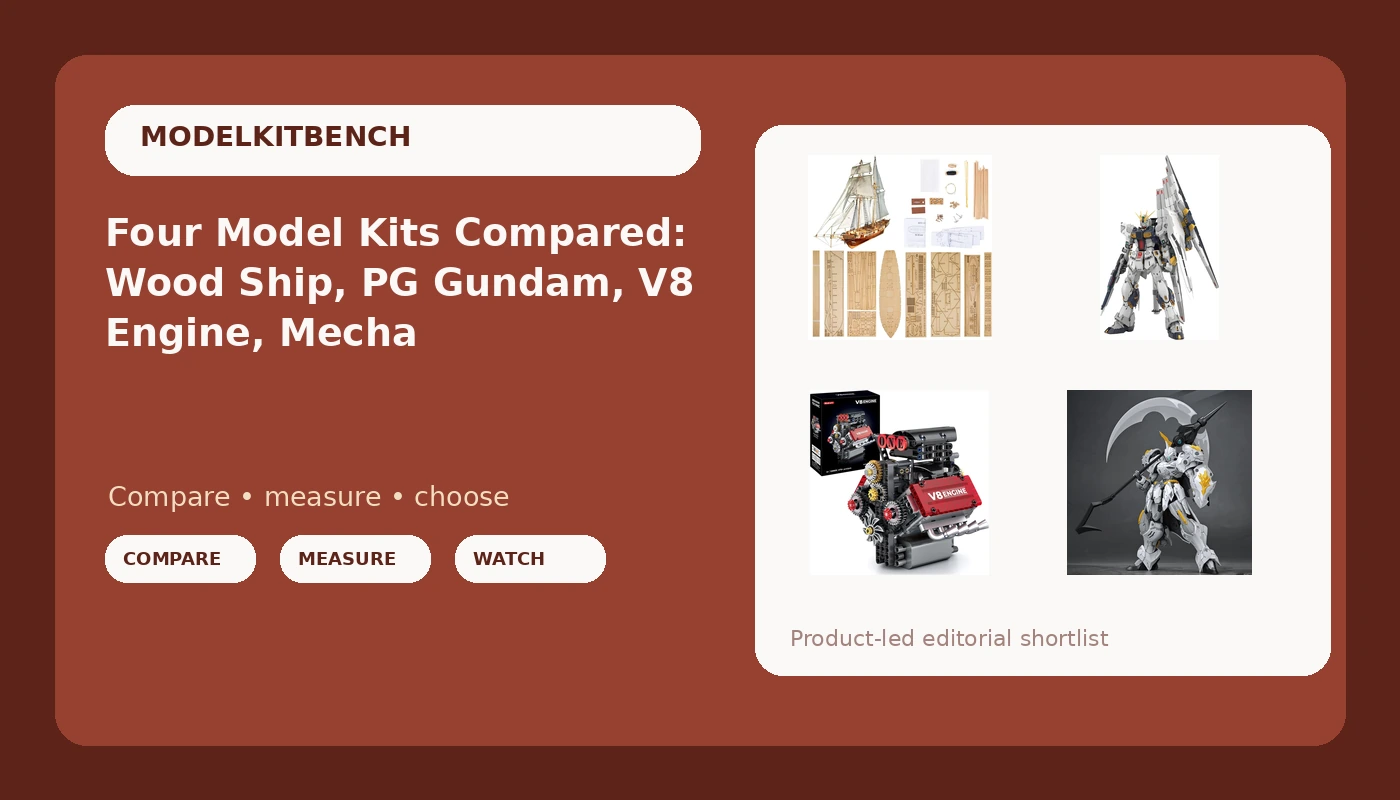
I built my first kit at eleven with borrowed nippers and a hobby shop owner who refused to let me leave until I had sanded a nub flat. Fifteen years of Gunpla and a decade of airbrushing later, I still score every box the same way: does it fit without glue, where are the gates, do the decals behave, and would I build it again for fun. That scorecard is why this model kit comparison looks odd at first glance. A 1/96 wooden sailing ship, a 1/60 Perfect Grade Gundam, a motorized V8 engine, and a 1:144 mecha figure share almost nothing except the word kit on the box. That is exactly why they belong in the same article. They are four different answers to the question of what you actually want out of a build.
One honest note before the table. I have built wooden ship kits, PG-scale Gunpla, and motorized engine models of this class, so I know what each category demands of a bench. I have not built these four specific kits, and I will not pretend I have. What follows is each kit read against my scorecard, using what the listings actually promise, plus what the category reliably asks of you.
If you want one answer: the Bandai Nu Gundam PG Unleashed is the best-engineered kit here and it is not close. The GAWEGM Harvey is the best value per hour of bench time. The WINGIFT V8 set is the best first build that moves. The Pipigirl mecha is the best quick win and the best gift.
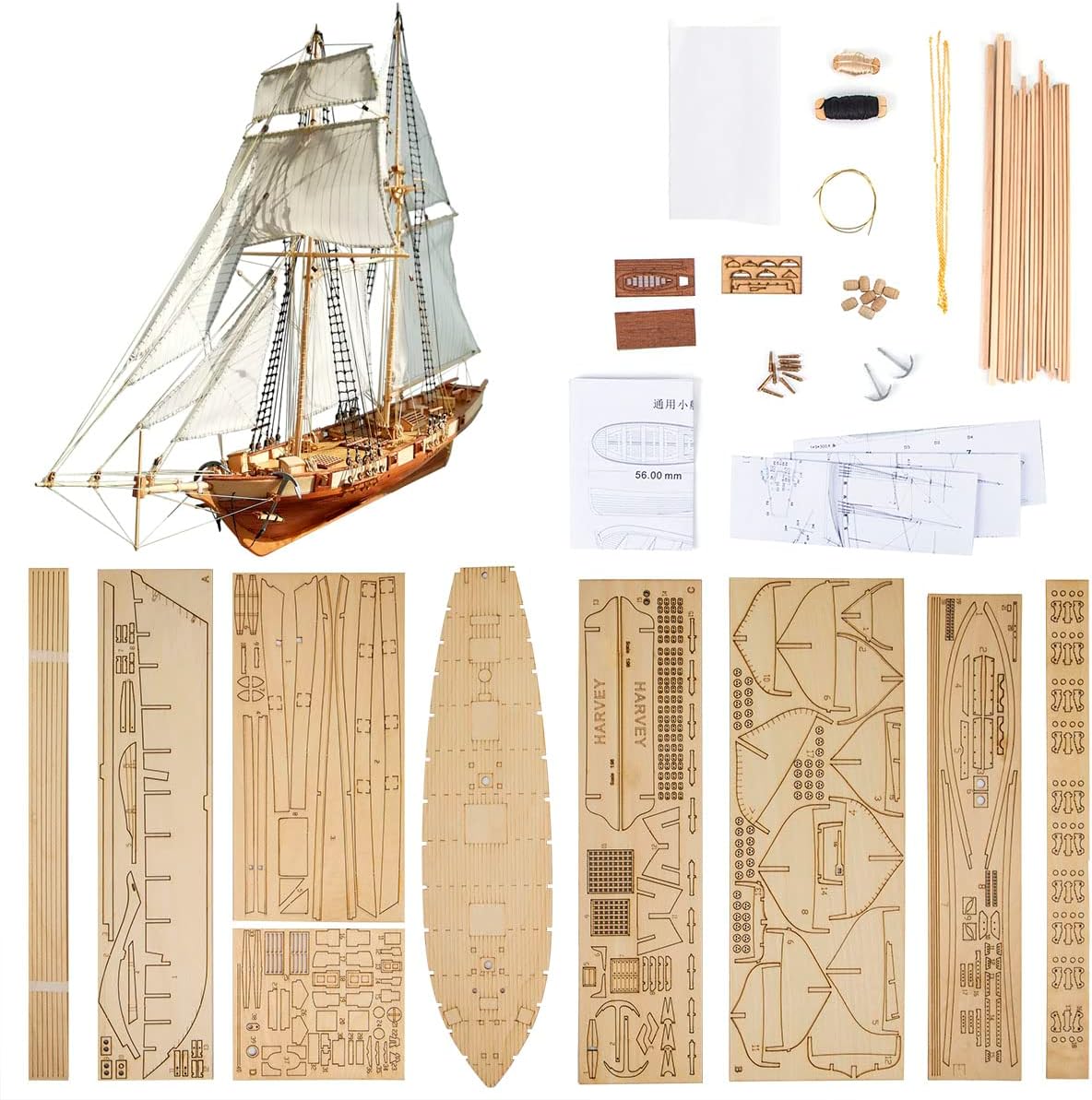
GAWEGM 1/96 Harvey 1847 Wood Sailboat
Cheapest route to a genuinely impressive shelf piece, and it teaches real skills: glue discipline, sanding, rigging patience
Glue is mandatory, painting is effectively mandatory, and it is measured in weeks, not evenings

Bandai Nu Gundam PG Unleashed 1/60
Snap-fit engineering at the top of the hobby, huge presence, decals worth the effort
The premium purchase of this group, and it wants a dedicated shelf plus real tool discipline
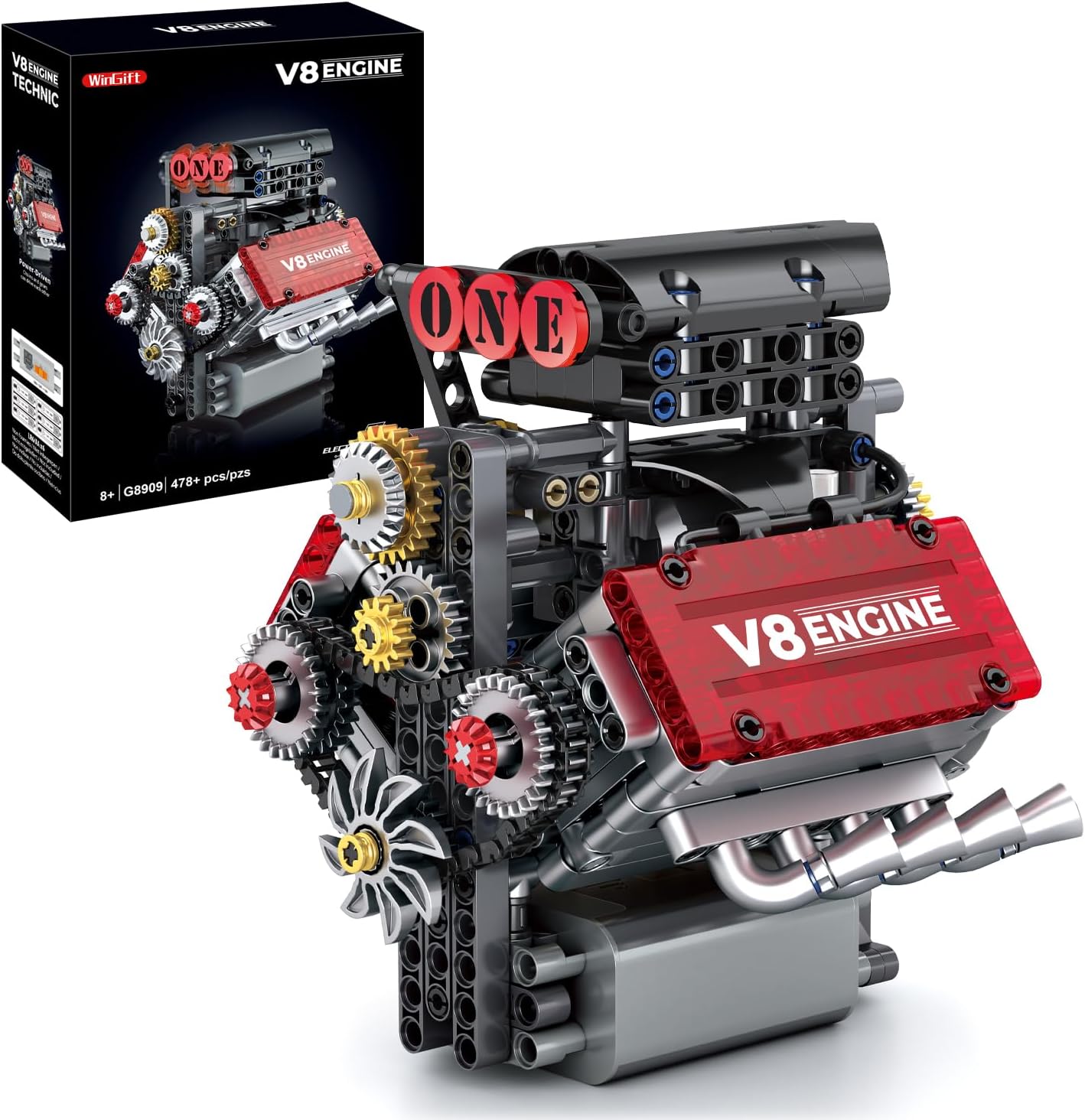
WINGIFT V8 Engine Building Set (478 pcs)
It runs. Motion plus mechanics makes it the most immediately satisfying build of the four
Visible hardware, plastic finish, and tolerances that punish a rushed assembly

Pipigirl Iron Sickle Kay 1:144 Mecha
Fast, cheap, forgiving, and a real confidence builder for a first-timer
Shallow detail, limited color separation, and it will not anchor a display case
Prices and availability were captured from Amazon Creators API and may change.
How I score a kit before I recommend it
Part fit is the soul of a kit. Snap-fit is the standard in this hobby, and a kit that needs glue where the box says no glue is a bad kit no matter how good the box art looks. When I read a listing, the first thing I look for is whether the manufacturer is proud of the assembly or quietly apologizing for it.
Gate placement is the second question. An under-gate hides the mark where the part meets the runner, which means less sanding and less risk of flattening a surface you wanted crisp. A gate sitting on a visible panel line is a design failure. You can fix it with putty and patience, but you should not have to.
Decals are the honesty test. Waterslides that shatter in warm water are not user error, they are a manufacturing problem, and they can turn a good build into a frustrating one. Stickers are fine when the kit is aimed at beginners, as long as the color underneath matches.
The last question is the only one that really matters: would I build it again for fun? A kit can be technically impressive and still be a chore. A kit can be simple and still be the one I reach for on a rainy Sunday.
The wooden ship: GAWEGM Harvey 1847 at 1/96
Wooden ship kits are the opposite of Gunpla in every way that matters. Glue is not a failure here, it is the entire method. You are not snapping parts together, you are building a structure, and the kit will ask you to hold pieces in alignment while adhesive cures. That is a different skill, and it is a skill worth having.
At 1/96 scale, a full-rigged ship is a tall piece, so plan for vertical shelf space rather than a wide footprint. Expect to handle masts, spars, and rigging line, which is where most first-time ship builders discover that patience is a physical resource. Rigging is repetitive and it is also the part that makes the finished model look like a ship instead of a hull with sticks on it.
The trade-offs are real. You will need wood glue and probably CA for rigging knots, sanding sticks, clamps, and a paint plan. Bare wood does not hide anything, so surface prep matters more than it does on plastic. If you rush the sealer coat, every scratch shows up in the final finish.
Who should buy it: the builder who wants a project measured in weeks and a centerpiece nobody else on the shelf can match. Who should skip it: anyone who wants a finished model this weekend.
The Perfect Grade: Bandai Nu Gundam at 1/60
This is the premium purchase of the group and the one that best demonstrates what the top of this hobby can do. Perfect Grade means a multi-layer inner frame, opening panels, and a part count that turns assembly into a multi-week project even though almost none of it requires glue. That is the point of the grade. The engineering is the product.
Bandai's snap-fit tolerances are the reason I tell beginners to start with the brand and work up. On a PG, that same discipline shows up as parts that seat with a click and stay seated, which is what lets you paint sub-assemblies and reassemble them without cracks. A PG is also where waterslides stop being optional. A decal sheet at this size is an evening of work on its own, and rushing it with stickers on a kit this large looks exactly as cheap as it sounds.
Where it loses: cost, footprint, and fragility during handling. A large kit with a lot of articulation is not a toy, and the inner frame is not built for a kid to pose repeatedly. It also punishes a bad tool setup. Cheap nippers will leave stress marks on big armor panels that are very hard to hide.
Who should buy it: the builder who has finished a few kits, owns decent nippers, and wants one flagship model on a dedicated shelf. Who should skip it: anyone buying a first kit, and anyone who has not yet learned to sand a nub flat without gouging the plastic.
Visit on Amazon → for current Amazon price and the full listing.
The V8 engine set: the one that runs
A 478-piece engine with a battery and a motor is a different kind of build, and honestly the most immediately satisfying one in this comparison. You are not just assembling a shape, you are assembling a mechanism that converts electricity into motion. Crankshaft, pistons, connecting rods, all moving because you put them in the right order.
That changes the failure mode. On a display model, a small mistake is cosmetic. On a running engine, a small mistake is a bind, a stutter, or a part that pops loose on the first rotation. Tolerances matter, and the fix is usually disassembly rather than force. I would rather a builder learn that lesson on a kit at this price than on something expensive.
The trade-offs are honest ones. Hardware is visible, because screws are how it holds together, and the finish is molded plastic rather than painted metal. It is not going to look like a machined engine block on your desk. It is going to look like a very good educational model that moves, which is exactly what it is.
Who should buy it: a curious kid with an adult nearby, a teenager who takes things apart anyway, or an adult who wants a mechanical build that does something. Who should skip it: anyone who only cares about surface finish and display realism.
Visit on Amazon → to see current Amazon price and what is in the box.
The 1:144 mecha: small, fast, honest
The Pipigirl Iron Sickle Kay is a 6.3 inch snap-fit figure at 1:144, marketed as easy to assemble, and it is the right kind of honest about that. This is a lunch-break build, not a project. Nippers, a hobby knife, and an hour of your evening, and you have something on the shelf.
What you give up for that speed is depth. Smaller scale means shallower detail, less color separation, and a finished model that reads well from a foot away and plainly from six inches. Expect stickers rather than waterslides, which is fine for the audience but means you should not expect a panel line wash to do much work. There is not enough recessed detail for ink to sit in.
What you get for it is momentum. Every builder I know who stalled out did so on a kit that was too ambitious for their current bench setup. A cheap, forgiving, quick kit is how you rebuild the habit. It is also the best gift of the four, because it does not require a parent to own an airbrush or a set of clamps.
Who should buy it: a first-timer, a gift buyer, or an experienced builder who wants a palette cleanser between big projects. Who should skip it: anyone chasing a centerpiece.
Visit on Amazon → for current Amazon price.
Trade-offs: time, tools, and shelf space
The wooden ship is the cheapest entry into a genuinely impressive finished model, but it is the most expensive in time and it is the only one of the four where glue is the primary assembly method rather than a repair tool. Budget for paint, clamps, and weeks.
The PG Gundam is the most expensive in money and the most demanding in tool quality. It needs almost no glue, which is a point in its favor, but it demands good nippers, a sanding routine, and the willingness to handle a large model carefully forever. It also needs the most shelf space by a wide margin.
The V8 engine sits in the middle on cost and is the fastest to something that does something. It needs a screwdriver, patience with small hardware, and the discipline to stop tightening when a part seats. It needs almost no shelf space and it is the one guests will actually pick up and turn on.
The 1:144 mecha is the lowest commitment in every category: cost, tools, time, and space. It is also the lowest ceiling. That trade is fair, and I would rather see a beginner buy it than buy a PG they are afraid to open.
Which one for which builder
Buy the wooden ship if you want a long project, you are comfortable with glue and paint, and you want the most striking thing on the shelf for the least money.
Buy the PG Nu Gundam if you have built a few kits, you own decent tools, and you want to see what the best snap-fit engineering in the hobby feels like. It is the kit here I would personally start on a Friday night and still be working on three weekends later, happily.
Buy the V8 engine set if the appeal of a model is that it moves. It is the strongest choice for a curious kid with adult supervision, and the strongest choice for anyone who learns by taking things apart.
Buy the 1:144 mecha if you are new, if you are buying a gift, or if you need to finish something this week to remember why you like this hobby.
What is next on my bench
I have three 2026 releases queued up with a part-fit scorecard each, and the wooden ship in this comparison has me thinking about how badly the hobby needs better beginner guidance on glue discipline. Plastic spoons teach you paint. Nobody teaches you clamping pressure.
Whatever you pick, do the boring thing first: read the manual, lay out the runners, and sand one nub properly before you commit to a whole assembly. The sprue is the truth. The box art is just marketing.