
I built my first Gundam kit at 11 and I have kept a pair of nippers within arm's reach ever since. Fifteen years of Gunpla and ten years of airbrushing have taught me that the hobby's real skill is not painting. It is reading a kit before you pay for it: where the gates sit, whether the parts fit without cement, and whether the decals survive warm water. That is the standard I bring to this comparison of four model kits for beginners, students, and anyone whose shelf has room for one more project.
Related: Panel Lining Basics For Beginners
For most readers, the smartest first purchase on this list is the Bandai Action Base 4 in clear, because it makes the kit you already finished look deliberate instead of lucky. But these four products are not really competing for the same shelf. One is a teaching aid, one is an accessory, one is a cement-and-paint project, and one is a working machine. The table below is the short version. The rest of this article is the honest version.
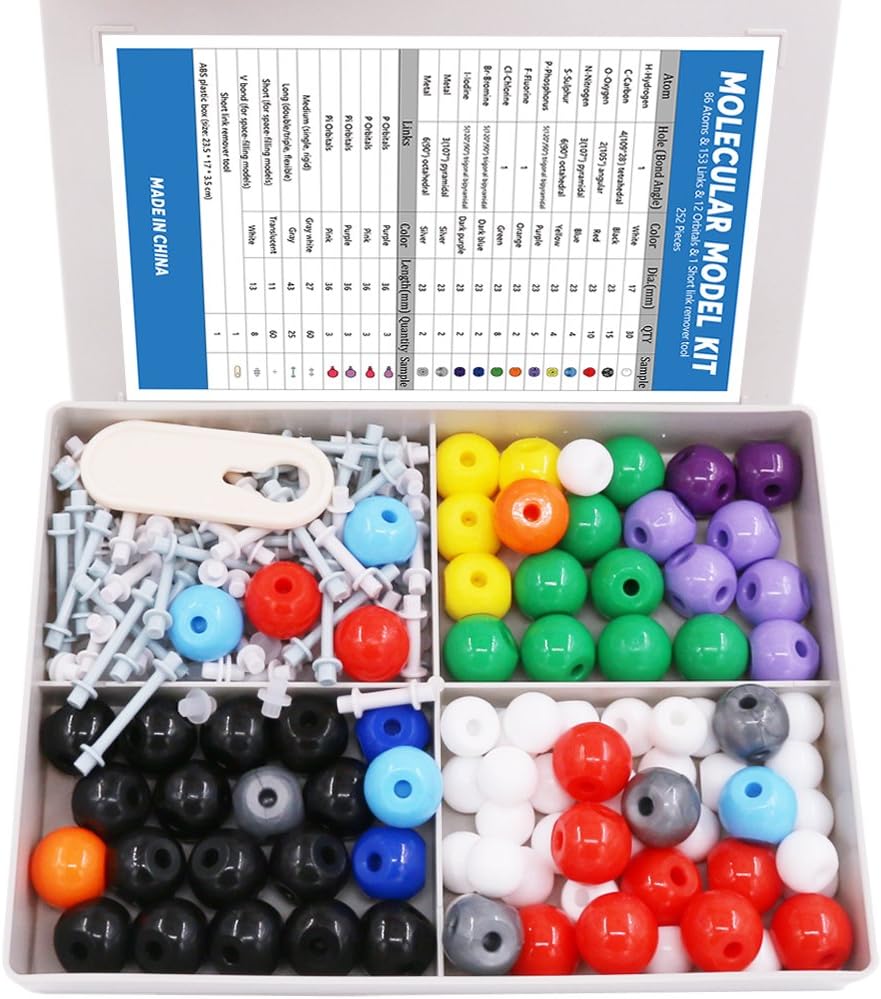
Swpeet 240 Pcs Organic Chemistry Molecular Model Student and Teacher Kit, Chemistry Molecular Model Student and Teacher Set - 86 Atoms & 153 Bonds & 1 Short Link Remover Tool
86 atoms and 153 bonds is enough to build real molecules, and the included link remover tool says the kit expects to be rebuilt, not glued once
It is a teaching aid, not a scale model, so it will never sit on a shelf as a finished build

Bandai Hobby - Action Base - Clear Action Base 4 (1/100) Multi
The cheapest way to make a 1/100 kit look intentional, and clear plastic disappears against almost any shelf
There is nothing to build here, and clear plastic shows dust and fingerprints faster than any other finish

AMT 1967 Chevy Impala 4-Door Supernatural 1:25 Scale Model Kit
A four-door family sedan is a more interesting subject than another race car, and 1:25 is a friendly size for a crowded shelf
It is a cement-and-paint build, so it is the wrong first kit for anyone who has only built snap-fit models
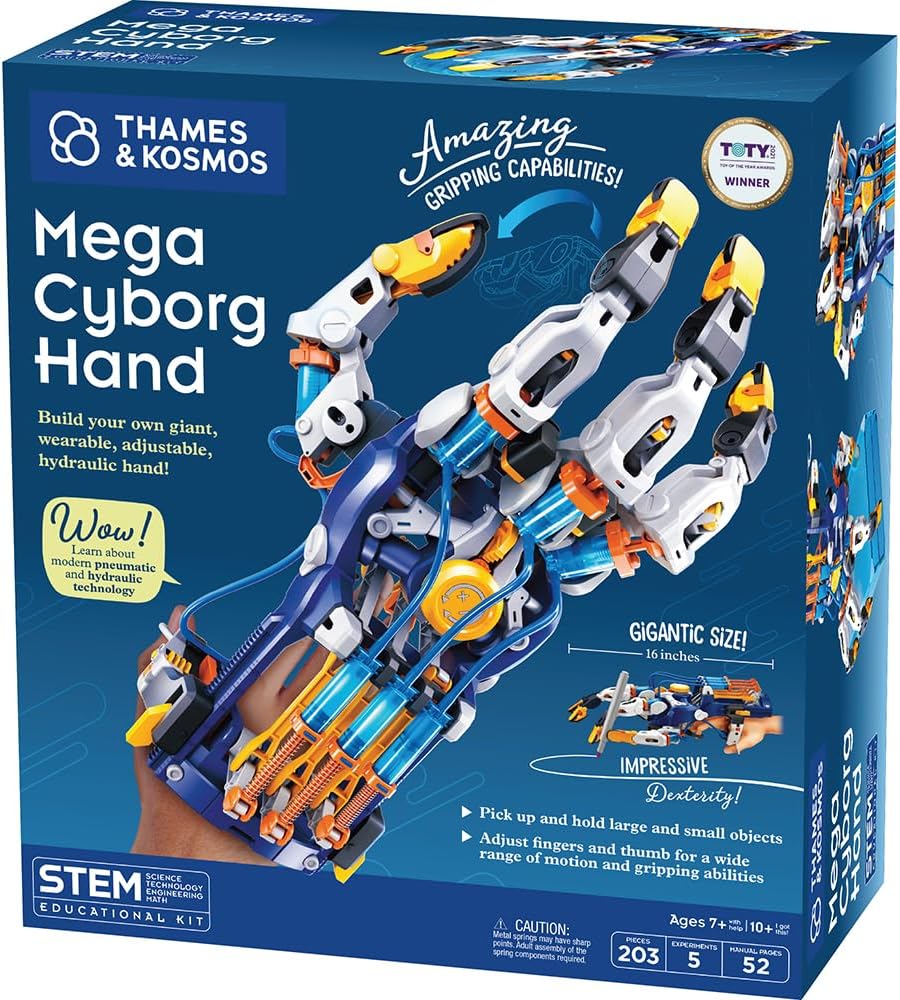
Thames & Kosmos Mega Cyborg Hand STEM Experiment Kit | Build Your Own GIANT Hydraulic Amazing Gripping Capabilities Adjustable for Different Sizes Learn Pneumatic Systems
Hydraulic and pneumatic systems you can actually watch move, with fingers that adjust to different hand sizes
The finish is toy-like by design, so nobody will mistake it for a display model
Prices and availability were captured from Amazon Creators API and may change.
The scorecard I use on every kit
Every kit that gets written about here goes through the same four questions, because those four questions are what separate a good kit from a box of plastic.
First, does it fit? Snap-fit is the standard for modern kits. If a manufacturer claims no glue and the parts need cement to stay put, that is a design failure, not a skill issue.
Second, where are the gates? A gate on a visible surface means extra sanding and a risk of flat spots. An under-gate means the engineer was thinking about the person holding the nippers.
Third, will the decals behave? Waterslides that shatter in warm water are cursed, and no amount of technique fixes a bad batch.
Fourth, would I build it again for fun? That is the real test. A kit can be accurate and still be a chore.
I also hold to a few boundaries. No verdicts on kits I have not built without aftermarket parts. No glue-dependent kit described as snap-fit. And no "beginner friendly" label on anything I have not assembled with basic tools. The four products below get judged on the job they were actually designed to do, not on the job I wish they did.
Swpeet 240 Pcs Organic Chemistry Molecular Model kit: geometry you can hold
The Swpeet set arrives as 86 atoms and 153 bonds, plus one short link remover tool. Read that spec sheet the way a modeler reads a parts count. The piece count is not about scale fidelity, it is about how many structures you can build before you have to disassemble something to keep going. The link remover tool is the giveaway: this kit was designed to be taken apart and rebuilt, which is exactly how a teaching tool should work.
Here is why it earns a place on a modeler's bench. Molecular models are an exercise in three-dimensional thinking. Bond angles do not care about your two-dimensional instruction sheet, and getting a structure to sit flat requires you to understand how the pieces relate in space rather than how they look on paper. That is the same mental muscle you use when you dry-fit a torso and realize the shoulder joint has to go in before the chest closes.
It also trains hand precision on small parts without any of the pressure of paint. You are handling tiny connectors, applying even pressure, and learning when to stop pushing. That is the skill that saves a nub from being gouged and a peg from being snapped.
Who is this for? Students who need to see a molecule instead of reading about one. Teachers who want a hands-on supplement that survives a semester. Parents looking for a screen-free project. And modelers who want to practice fine assembly without committing an evening to masking tape.
The trade-off is honest and simple. This is not a display model. The plastic is a teaching material, not a scale surface, so do not buy it hoping to practice surface prep or panel lining. It will teach you geometry, patience, and part handling. It will not teach you how to make a seam line disappear. Visit on Amazon → to see what the current kit includes.
Bandai Action Base 4 in clear: the cheapest upgrade on the shelf
Every builder eventually hits the same problem. The kit is finished, the pose is good, and the thing falls over every time a door closes. A display stand fixes that, and Bandai's Action Base 4 in clear is the version I recommend most often, because it is sized for 1/100 scale kits and the clear plastic does not fight whatever colors you painted.
Think about what a stand actually does. It takes a static object and gives it a pose. An airborne pose with one leg extended reads as motion, and motion is what makes a shelf look like a collection instead of a lineup. Clear plastic helps because it does not introduce a second color into the composition. The eye reads the kit, not the hardware.
The engineering here is simple and that is fine. A base, an arm, and the hardware to hold a kit in place. Bandai has been making these long enough that the tolerances are predictable, which matters more than any feature list. A stand that sags under a heavy kit is worse than no stand at all.
The trade-offs are real. There is nothing to build. If you bought this hoping for a project, you bought the wrong thing. Clear plastic also shows dust, fingerprints, and scratches more than any opaque finish, so if your shelf is near a window or a kitchen, budget for a soft brush. And because it is a 1/100 scale stand, a 1/144 kit will look undersized and awkward on it. Match the stand to the grade you actually build.
Where it wins is value per shelf inch. It is the least expensive way on this list to change how a finished build reads, and it does it without a single drop of paint. Visit on Amazon → if you want to see the current listing.
AMT 1967 Chevy Impala 4-Door: the glue-and-paint project
This is the one that requires a different skill set. AMT's 1:25 car kits are cement-and-paint builds. There is no snap-fit here, no color-molded parts pretending to be a finished model, and no shortcut around body work. If your entire experience is modern Gunpla, understand that you are changing disciplines, not just subjects.
The subject itself is the reason to care. A 1967 four-door Impala is a family sedan, not a supercar, and that is exactly what makes it interesting on a shelf. Everyone has a row of low, wide, aggressive shapes. A big honest four-door with chrome trim stands out because it looks like something a person actually drove. The show connection does not hurt either.
What does the build involve? Cement, paint, and patience. Body prep is where car models are won or lost. Panel lines need to stay crisp, chrome trim needs to be masked or foiled, and the finish on a large flat surface is unforgiving in a way that a busy robot torso never is. Every imperfection on a door panel is visible from across the room.
Who is this for? Modelers who already own cement and a paint setup and want a subject that is not another mech. Supernatural fans who want the car on the shelf. Anyone who wants to learn body finishing, because a car is the best teacher for that skill. It is also a good size at 1:25, big enough to hold detail, small enough to fit on a shelf that is already crowded.
Who is it not for? Someone buying a first kit. A cement-and-paint car with a large glossy body is a hard place to start, and a frustrating first build is how people leave the hobby. Build two snap-fit kits first, learn to sand a nub clean, then come back. Visit on Amazon → to check the current listing.
Thames & Kosmos Mega Cyborg Hand: engineering you can watch move
This one is not a scale model at all, and that is the point. The Mega Cyborg Hand is a hydraulic and pneumatic experiment kit that builds into a giant gripping hand with fingers that adjust to different sizes. It exists to teach how fluid pressure becomes motion.
For a modeler, that is a genuinely useful lesson. Most of us spend our time on how a thing looks. This kit is about how a thing works. You assemble a mechanism, and then the mechanism does something. Watching a hydraulic line push a finger closed is a better explanation of pressure than any diagram, and the adjustable finger sizing means more than one person in the house can actually use it.
The appeal is broad. Kids get a giant robot hand that grabs things. Adults get a working demonstration of a system they have probably never thought about since a science class. Teachers get a kit that survives handling. And builders get a reminder that engineering is not only about part separation and color accuracy.
The trade-offs are worth stating plainly. This is a STEM kit, not a replica. The finish is toy-like, there is no painting or weathering expected, and it will not blend in with a shelf of scale models. If you want display realism, buy something else. If you want to understand why a hydraulic arm moves the way it does, this is the most direct route on this list. Visit on Amazon → to see what the current kit includes.
The trade-offs the table hides
A table can tell you what a product is. It cannot tell you what a product costs you in time, tools, and shelf space. So here is the part the table leaves out.
Tools are not optional. Nippers, a hobby knife, sanding sticks, and a soft brush are the floor for any of these builds. Add cement, paint, and masking supplies and the Impala becomes a much larger commitment than its listing suggests. The molecular set needs almost nothing beyond the box. The Action Base needs a stand and a shelf.
Skill curves differ wildly. The Action Base is a five-minute install with no failure mode. The molecular set is easy to assemble and hard to assemble correctly, which is a good kind of difficulty. The Impala demands a finishing skill set you have to build deliberately. The cyborg hand sits in the middle: forgiving assembly, satisfying result.
Time is the hidden cost. A snap-fit kit is an evening. A cement-and-paint car is a project measured in weeks, because paint needs to cure between stages and rushing it is how you ruin a body panel.
Finally, none of these four replaces a good snap-fit mech kit. They are adjacent purchases: one teaches geometry, one solves display, one teaches finishing, and one teaches mechanism. Buying all four would be a strange way to spend money. Buying the one that fixes your actual problem is not.
Which one should you buy?
If your finished kits keep falling over, buy the clear 1/100 Action Base. It is the smallest change with the biggest effect on how your shelf reads, and it requires no skill at all.
If you are a student, a teacher, or a parent who wants a hands-on science project, buy the Swpeet molecular model kit. The piece count and the link remover tool mean it is built to be used repeatedly rather than displayed once.
If you already own cement and paint and you want a subject with real presence, buy the AMT Impala. Just go in knowing it is a finishing project, not a weekend snap-fit.
If you want to understand how a mechanism moves, buy the Mega Cyborg Hand. It will never match your scale models on a shelf, and it will teach you something none of them can.
What is on the bench next
I am working through this year's new real grade releases with a part-fit scorecard for each one, plus a verdict on whether the added detail justifies the added fragility. The pattern I keep seeing holds: the kits that need the least correction are the ones that were designed by someone who cared about the person holding the nippers. That is true of a display stand, a molecular model, a 1967 sedan, and a hydraulic hand. It is true of everything in this hobby.