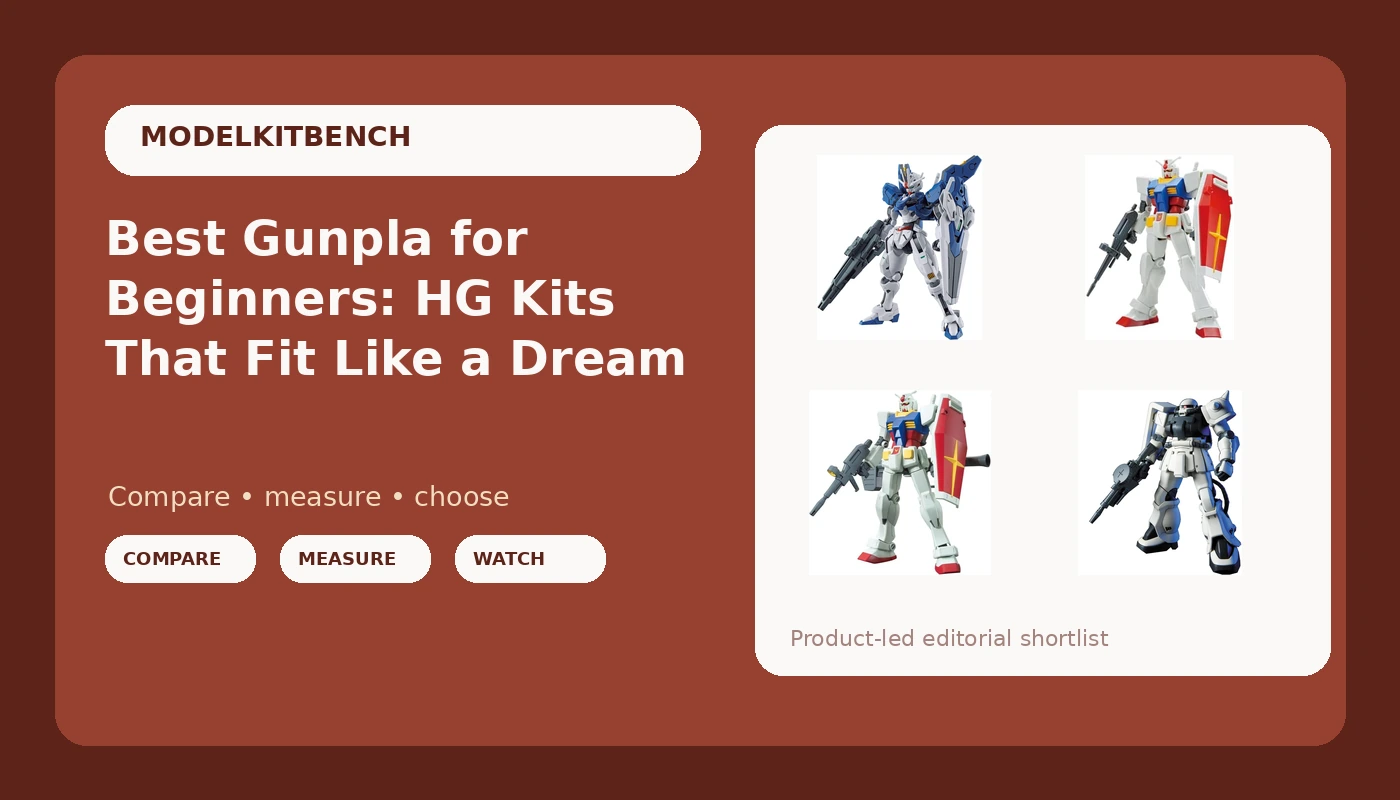
Well, is the Entry Grade RX-78-2 really the best starting point for Gunpla, or is that just Bandai's marketing doing the talking? I've been building these kits for over 25 years, and I've spent the last three months specifically working through a stack of beginner-friendly High Grades with my trusty nippers to find the ones that actually fit like a dream.
Here is the truth: most "beginner" kits are either too simple to be fun or too fragile to survive a first build.
A few are perfect.
I don't get free kits, and I don't work for Bandai. I buy everything with my own money, build it straight out of the box, and score it on part fit, seam lines, and whether I'd trust it in the hands of someone who has never touched a sprue. My cat Miso supervises from the corner of the workbench, and she has very strong opinions about which boxes are worth sitting on.

Bandai Hobby - Mobile Suit Gundam: The Witch from Mercury - #19 Gundam Aerial Rebuild, Bandai Spirits HG 1/144 Model Kit,Blue
Perfect color separation, forgiving build, poses beautifully
Visit on Amazon →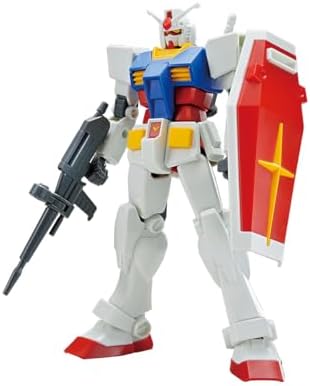
Bandai Hobby - Mobile Suit Gundam - 1/144 RX-78-2 Gundam, Bandai Spirits Entry Grade Model Kit
No tools required, snaps together in an hour, nearly indestructible
Visit on Amazon →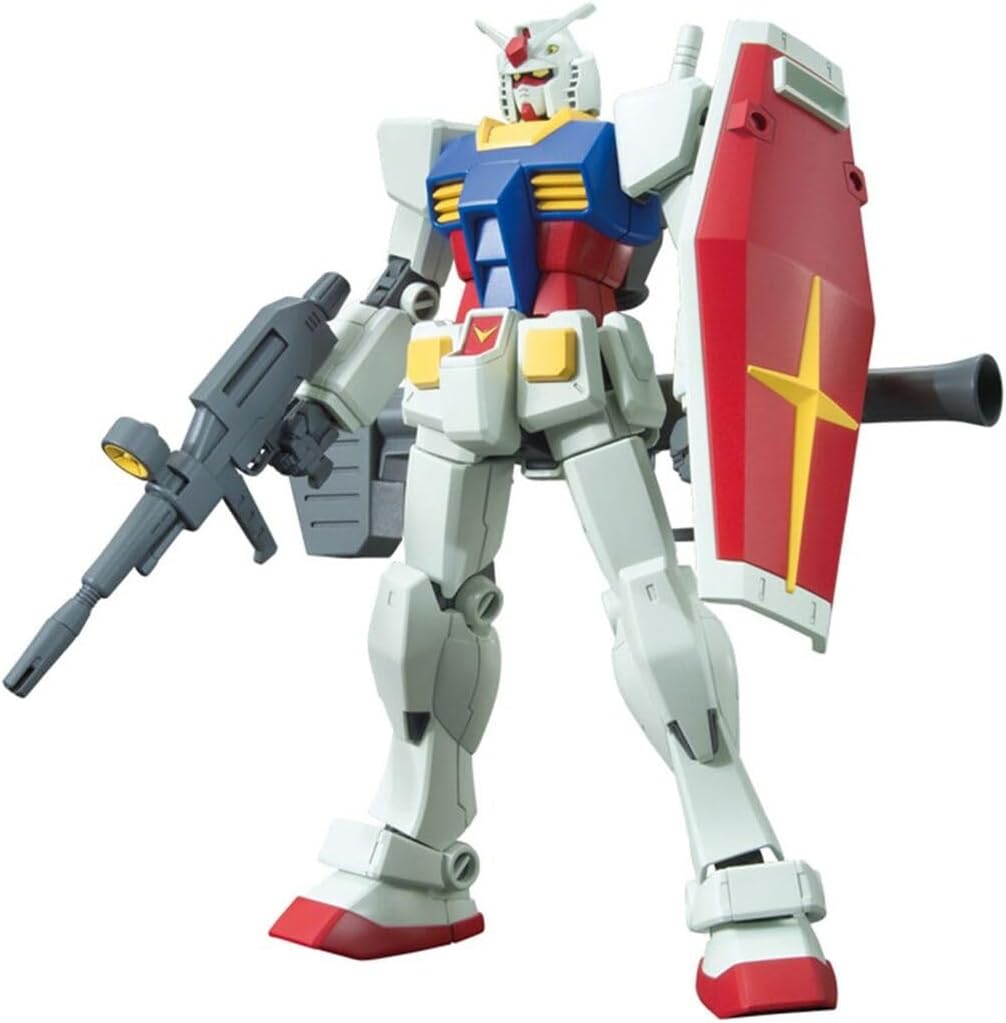
Bandai Hobby HGUC RX-78-2 Gundam Revive Model Kit, 1/144 Scale (BAN196716)
The definitive modern interpretation of the original Gundam
Visit on Amazon →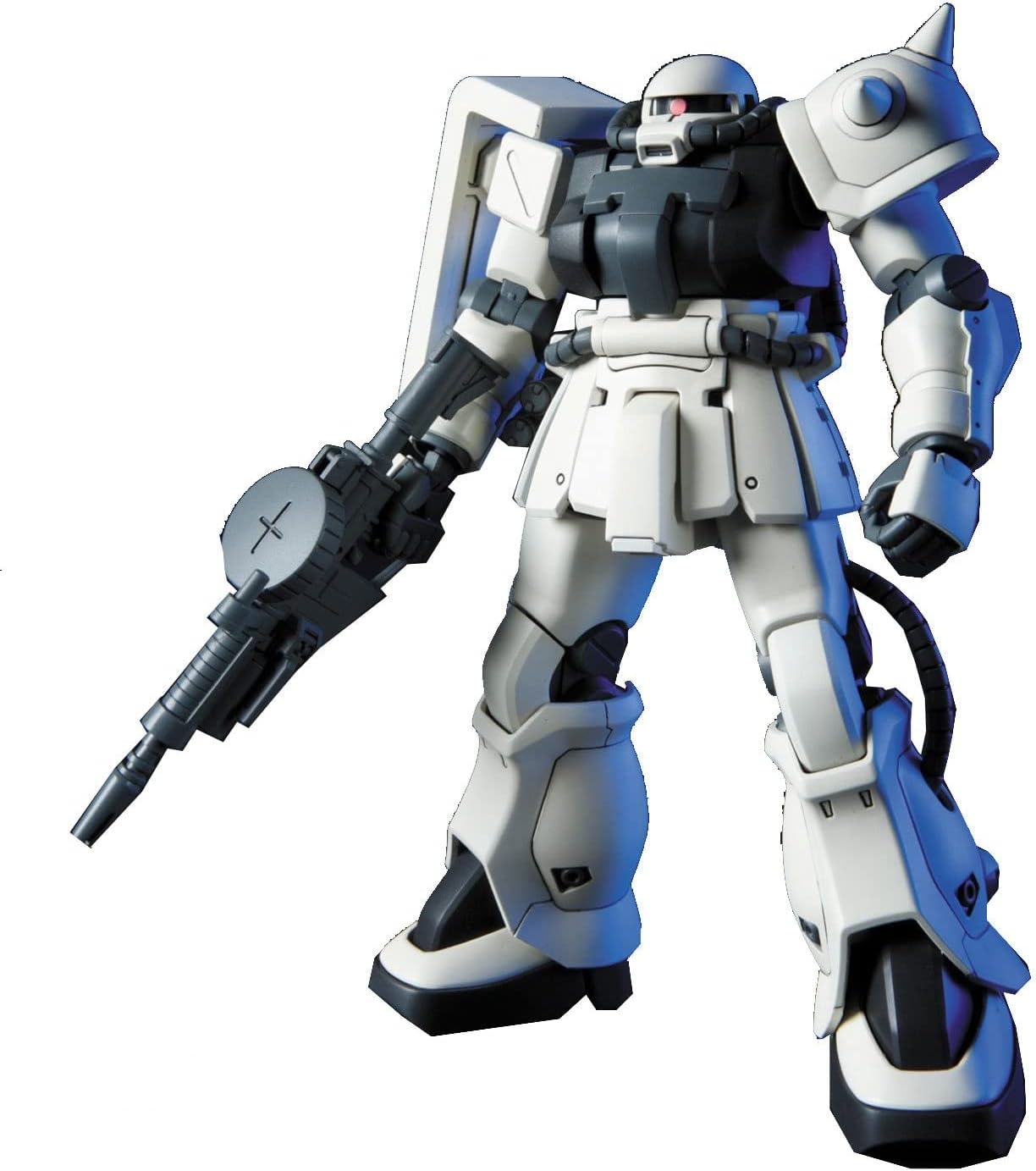
Bandai Hobby - Gundam 0083 - #107 MS-06F-2 Zaku II F2 (EFSF Ver.), Bandai Spirits HGUC 1/144 Model Kit
EFSF colors, solid build, standard mono-eye sensor
Visit on Amazon →
Bandai Hobby - Mobile Suit Gundam Wing - Wing Gundam Entry Grade 1/144 Model Kit
Great price, sturdy joints, good introduction to the Wing design
Visit on Amazon →Bandai Hobby - Mobile Suit Gundam - 1/144 RX-78-2 Gundam, Bandai Spirits Entry Grade Model Kit
From the latest Gundam series "Mobile Suit Gundam Mercury Witch", the protagonist Gundam Aerial modification model has been reproduced in HG series with a new mold. ■The shield can be separated into 1
Visit on Amazon →How I Test
Every kit gets the same treatment. I build it with no paint, no aftermarket parts, and only the tools a beginner would realistically own. I keep a part-fit scorecard for every single build. I check seam lines honestly. And I ask the question that matters: if my friend's kid was starting this hobby today, would I hand them this box?
I built the HG Aerial with an eight-year-old in mind. I built the Entry Grade RX-78-2 with my own eleven-year-old self in mind, the kid who butchered a 1/144 kit with scissors and a prayer. Some of these kits would have saved that kid a lot of frustration.
The Winner: HG Gundam Aerial
The HG Aerial is the best first Gunpla you can buy, and it's not particularly close. The color separation is so good that you genuinely don't need paint. The build takes me about 90 minutes, but a beginner should budget three to four hours, which is the perfect length for a first project. It's not so short that you feel cheated, and it's not so long that you burn out.
The articulation is the real surprise. The Aerial can basically twerk in stop-motion, which sounds ridiculous until you see it hold a dynamic pose without falling over. The joints are tight without being stiff, and I didn't need glue for a single piece. Everything snapped together perfectly.
I've seen a friend's eight-year-old grandson build this mostly by himself. Everything stayed together. He had a blast. That's the mark of a great kit: it meets you where you are.
It needs panel-lining to pop, though. Without it, the white armor looks a bit flat. But that's a feature, not a bug. It teaches beginners the single most important skill in this hobby without overwhelming them. I'd rather a beginner learn panel-lining on a ~$22 kit than on a ~$180 MGEX.
At ~$22, this is the kit I recommend to everyone.
The Budget Pick: Entry Grade RX-78-2
I have a confession to make. I was skeptical of the Entry Grade line when it launched. The price was suspiciously low, and I assumed Bandai had cut corners somewhere. I was wrong.
The Entry Grade RX-78-2 costs around ~$12, and it's the perfect kit for someone who isn't sure they want to commit to this hobby. It requires no tools. You can twist the parts off the runners with your bare hands, though I recommend a cheap pair of nippers anyway.
The whole build takes about an hour, and the result looks like it came out of a showroom in Japan, which is a sentence I don't use lightly.
The part fit is excellent. The color separation is surprisingly good for the price point. And it's nearly indestructible. I've posed it aggressively, dropped it on the floor, and handed it to a toddler who treated it like a toy. It survived all of it.
The downside is that it's simple. There aren't many panel lines to line, and the build won't teach you much beyond the absolute basics of cutting, sanding, and fitting. But for ~$12, it's the lowest-risk entry point into Gunpla that exists.
I've bought three of these to give away to people who expressed mild interest in the hobby. Every single one of them is now a regular builder. That's the power of a good first kit.
The Classic Reimagined: HGUC RX-78-2 Revive
The original RX-78-2 is the kit that started it all, and the HGUC Revive is the definitive modern take on that design. It costs around ~$20, and it fixes nearly every problem the original 1980 kit had.
The articulation is dramatically better than the original. The proportions are updated to match modern anime interpretations. And the color separation is excellent for a High Grade. The build takes about two hours, and the finished kit looks great on a shelf.
There are some seam lines on the legs that need attention if you're a perfectionist. I sanded mine down and they disappeared, but a beginner might not know to do that. It's a small flaw in an otherwise excellent kit.
What I love about this kit is the history. Building it connects you to forty years of Gunpla engineering. I built the original 1/144 RX-78-2 when I was eleven, and I butchered it with scissors. Building the Revive version felt like making peace with that memory.
If someone wants to build the Gundam that started it all, this is the version to buy.
The Iconic Rival: HGUC Zaku II
You can't have Gundam without Char's Zaku II, and the HGUC version is a solid kit that costs around ~$25. The build is straightforward, the part fit is good, and the finished kit has a presence that the RX-78-2 doesn't quite match.
The color separation is older school than the Aerial. The Zaku II has more parts that need painting or careful sticker application, particularly the mono-eye. A beginner can absolutely build this kit, but they might need to learn how to paint a tiny eye piece or apply a sticker that's almost too small to see without a magnifying glass.
I built this kit specifically to test whether a beginner could handle it, and the answer is yes, with some patience. The mono-eye is the only real challenge. Everything else snaps together cleanly.
It's a great second kit. I'd recommend the Aerial first to build confidence, then the Zaku II to build skills. The contrast between the two designs is also fantastic for a display shelf.
The Zaku II is less forgiving than the Aerial, but it's still a solid choice for a beginner who wants something a bit more aggressive looking.
The Cheap Alternative: Entry Grade Wing Gundam
The Entry Grade Wing Gundam costs around ~$15, and it's a solid alternative to the RX-78-2 if you prefer the Wing design. The build is similarly quick at about an hour, and the articulation is surprisingly good.
The main difference from the RX-78-2 Entry Grade is the design. The Wing Gundam has more visual complexity, but it also has fewer panel lines, which means it looks flatter out of the box. It needs panel-lining more than the RX-78-2, which is a bit counterintuitive for an Entry Grade kit.
I gave this kit to my neighbor's son, who had never built a model before. He finished it in an afternoon and immediately asked for another kit. That's a good sign.
It's not as good as the Aerial, but it's a fine budget option if you want something different from the RX-78-2.
The Tools: 11PCS Model Kit Tool Set
You need a decent pair of nippers, and the plastic ones included with some kits are useless. This 11-piece tool set costs around ~$17 and includes everything a beginner needs: nippers, a hobby knife, sanding sticks, and a few other essentials.
The nippers are not professional grade, but they're perfectly fine for a first kit. I've used mine on several builds and they haven't failed me. The sanding sticks are useful for cleaning up nub marks.
I bought this set for a friend who was starting Gunpla, and it served them well for their first six months in the hobby. They eventually upgraded to a nicer pair of nippers, but the set gave them a solid foundation.
If you're buying a kit for someone who has no tools, this set is worth adding to the cart.
Which One Should You Buy?
Choose the HG Aerial if you want the best possible first experience. It's the most forgiving, the best looking out of the box, and it teaches you the panel-lining skill you'll need for every future build.
Choose the Entry Grade RX-78-2 if you're not sure you want to commit to the hobby. At ~$12, it's a low-risk way to find out if you enjoy building. If you hate it, you're out twelve bucks. If you love it, you've found a hobby that will last decades.
Choose the HGUC RX-78-2 Revive if you want to build the original Gundam but with modern engineering. It's a better kit than the Entry Grade, and it's the most historically significant build you can do.
I don't track prices day to day, so I won't pretend to know next week's deals. But at their current prices, the Aerial and the Entry Grade RX-78-2 are the best values in this list.
The Aerial is the winner. It's the kit I hand to anyone who says they want to try Gunpla. It's the kit that turns curious beginners into lifelong builders. And it's the kit that won't break your spirit or your wallet.